Last updated: September 24, 2026
Boise Electrician Experts connects business owners with licensed electrical contractors serving commercial property in Boise and the Treasure Valley. A commercial electrician in Boise works to a different set of constraints than a residential one: three-phase service rather than single-phase, a permit and inspection path through DOPL on top of local building permits, and a schedule that has to fit around trading hours, because a closed restaurant is a cost per hour.
What we do on the first visit
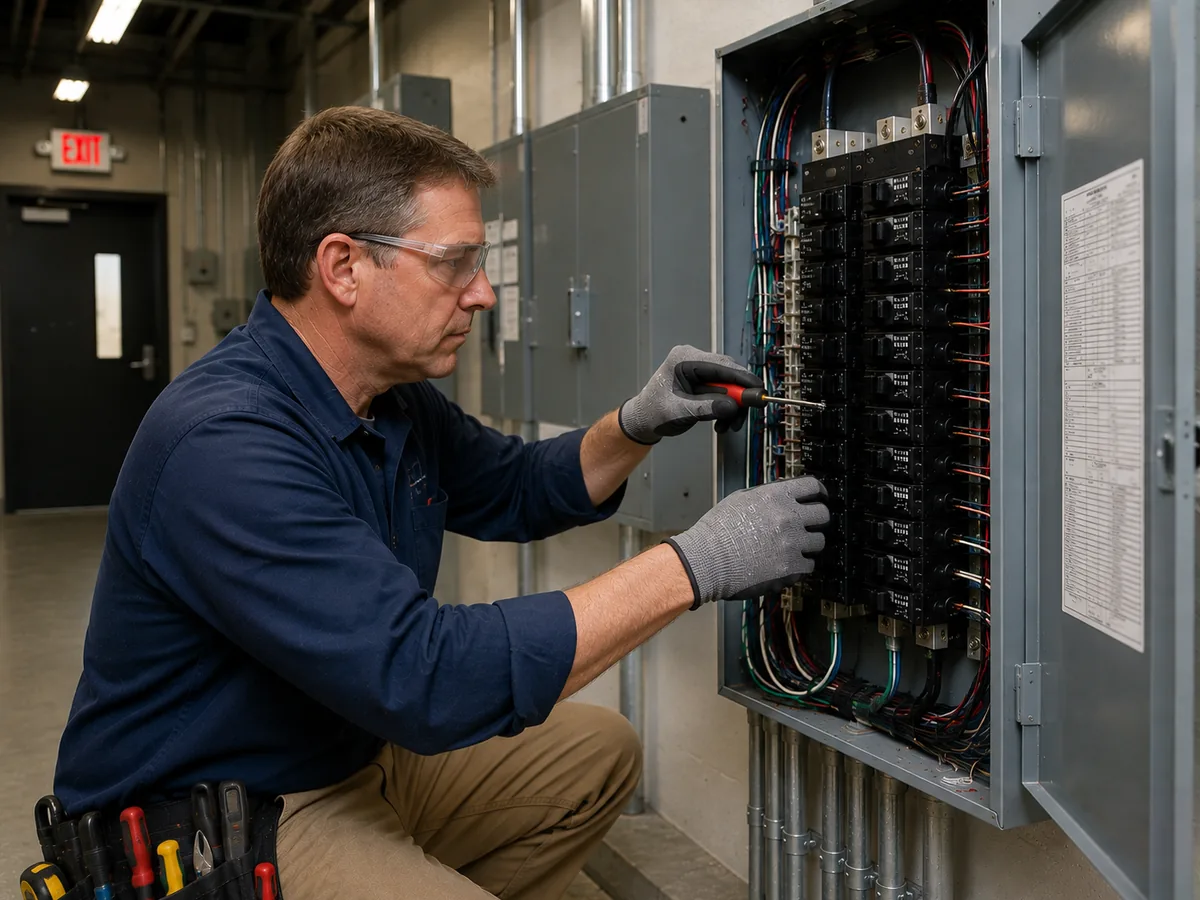
Every commercial electrical services job starts the same way: we look before we quote. You get the cause in writing, a price that does not move once work begins, and the permit filed by us rather than by you.
- Walk the space and the service. What the building actually has, what the equipment schedule needs, and where the gap is.
- Scope, price and permit path. Itemized, with inspection milestones on the schedule so the opening date is real.
- Work around your hours. Overnight and pre-open scheduling where closing costs more than the labor premium does.
- Close out with documentation. Inspection sign-off, as-built panel schedules and the permit record for your landlord and insurer.
Two permit systems, and why that catches people out
Commercial electrical work in Idaho runs through more than one authority, and the interaction is the thing that slips schedules.
The electrical permit and inspection come from the state — the Division of Occupational and Professional Licenses — purchased online and priced on the declared value of the work. The building permit for the fit-out comes from the city or the county. Having one does not give you the other, and on a tenant improvement you will generally need both. Business owners who assume the general contractor's city permit covers the electrical scope discover otherwise at inspection.
Licensing matters here too. Only a licensed electrical contractor can pull the permit and advertise electrical work, and Idaho requires a contractor to carry at least $300,000 in liability insurance to hold that license. On a commercial project that certificate is something your landlord will almost certainly ask to see, so ask for it at bid stage rather than at closeout.
Restaurant and brewery work, which is a lot of this market
Food and beverage is the dominant commercial electrical scope in Boise's growing downtown and in Meridian's and Nampa's retail corridors, and it has a recognizable shape. The equipment schedule almost always exceeds what the existing service was built for, because kitchens have got more electric over time: induction ranges, combi ovens, blast chillers and walk-in compressors are all substantial dedicated loads. A brewery adds glycol chillers and pumps that run continuously.
Three problems recur. Refrigeration and POS sharing a circuit or a phase leg, so a compressor start browns out the till mid-service. Insufficient GFCI coverage in wet areas, which fails inspection reliably. And hood interlocks wired so that make-up air and the exhaust fan do not sequence correctly.
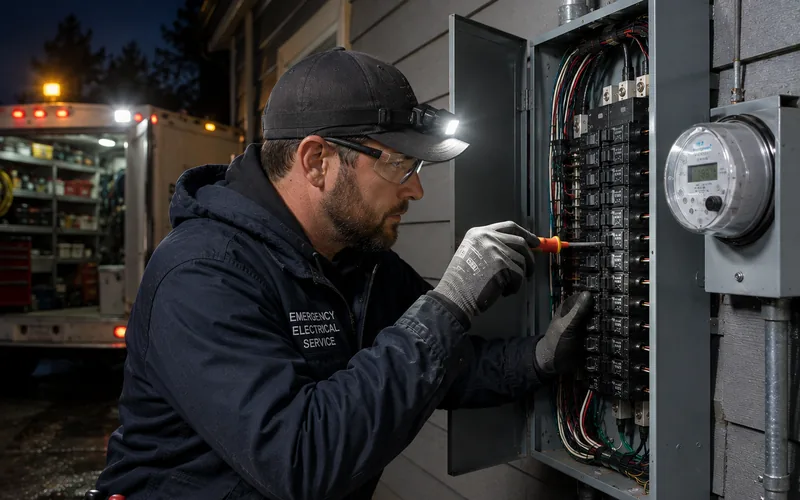
The scheduling constraint is the real one. Changeover work happens overnight and pre-open where the cost of closing exceeds the after-hours labor premium, which for a trading restaurant it almost always does. That gets agreed at quote stage, not negotiated mid-job.
What is included
- Load study of the existing service before any scope is written
- Itemized quote with schedule, permit path and inspection milestones
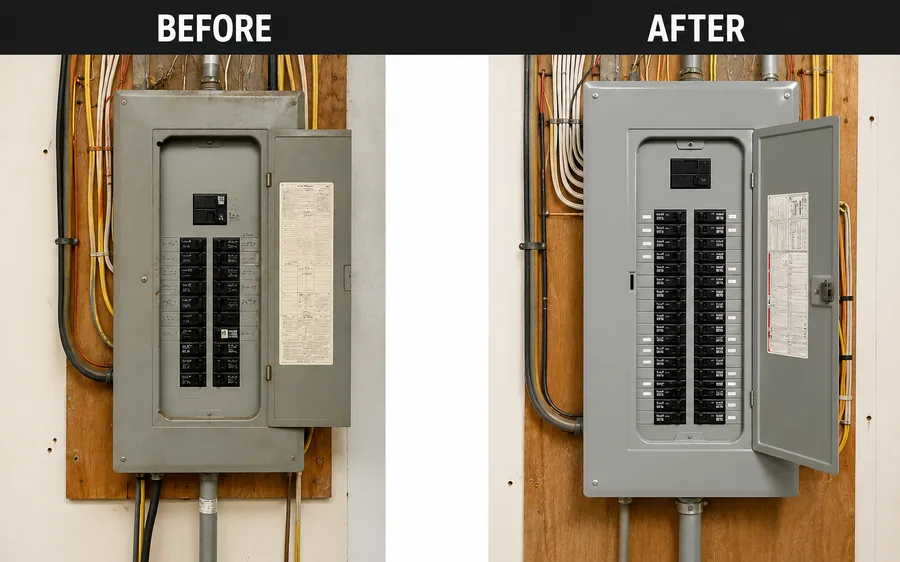
- Three-phase distribution, panelboards and motor circuits
- Dedicated clean circuits for POS, data and refrigeration
- Emergency and egress lighting to code
- After-hours and overnight scheduling to protect trading
- DOPL permit and local building permit coordination
- As-built panel schedules handed over at closeout
What you should expect to pay
Commercial work is quoted per scope rather than from a published band, because three-phase service, occupancy classification, after-hours labor and the condition of the existing service move the number more than any per-unit figure would capture. What we do commit to is an itemized quote with the schedule and the permit path spelled out before you sign anything.
| Component we can publish | Range |
|---|---|
| Licensed electrician, hourly | $80 - $140 per hour |
| DOPL electrical permit | Scaled to job value |