
What working in Star is actually like
Star is the newest housing stock in the valley by a clear margin. Proportionally it has grown faster than anywhere else in the Treasure Valley, and the practical consequence is that almost nothing here has an old-wiring problem. There is essentially no knob-and-tube, very little mid-century service to upgrade, and few of the panel brands that trouble insurers elsewhere. Quoting Star off Boise assumptions gets it wrong in both directions.
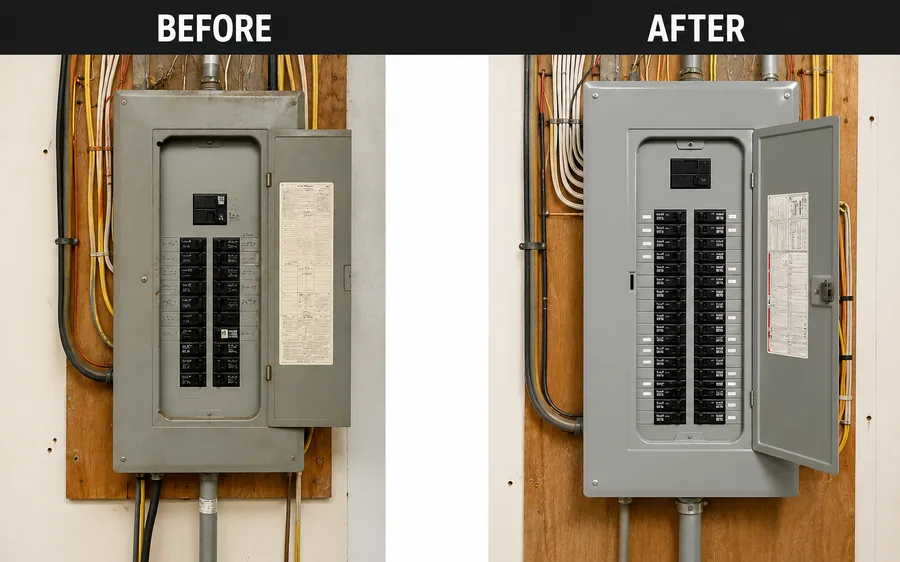
What Star has instead is a lot of houses two to ten years old whose owners are now adding things. The pattern is consistent: a builder package sized to the plan, then a shop, a hot tub, a charger, a finished bonus room, an RV hookup, and often outdoor kitchen or landscape lighting. Individually those are modest. Together they exhaust a panel that has no spare slots and a service that was never calculated with them in mind. The work is subpanels, dedicated circuits and occasional service upgrades — not repair.
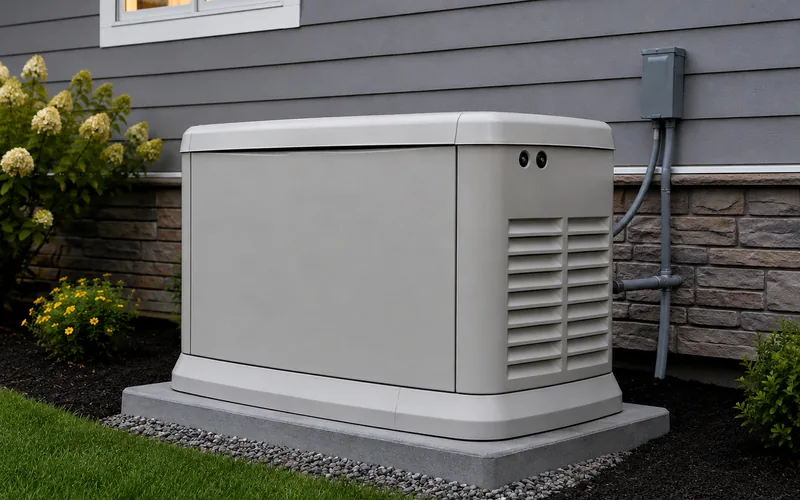
The second half of Star is acreage. Along the river and out toward Can-Ada the lots get large, and with them come detached shops, barns, wells and RV parking that needs real power rather than an extension cord. That work is feeders and subpanels, and it needs doing properly the first time: disconnecting means at each structure, correct neutral and ground separation, and cable rated for the burial method actually used. These are also the properties most exposed when wind events take lines down, which is where the standby power conversation starts.