Last updated: September 24, 2026
Boise Electrician Experts connects homeowners with licensed electrical contractors who rewire older homes across Boise and the Treasure Valley. House rewiring in Boise is rarely a clean sheet: it is almost always the removal of an obsolete wiring system from a building people are still living in, and in the North End and East End it means working around original fir floors, built-in cabinetry and plaster that is a large part of what the house is worth. Scope, sequencing and price all follow from what is actually in the walls, which is why the first visit is a survey rather than a quote.
What we do on the first visit
Every house rewiring job starts the same way: we look before we quote. You get the cause in writing, a price that does not move once work begins, and the permit filed by us rather than by you.
- Survey what is really there. Attic, basement or crawlspace, panel, and a sample of boxes. Most older Boise houses hold two or three eras of wiring at once.
- Scope it in tiers. Safety-critical first, then capacity, then convenience. You see a price for each tier and choose the line.
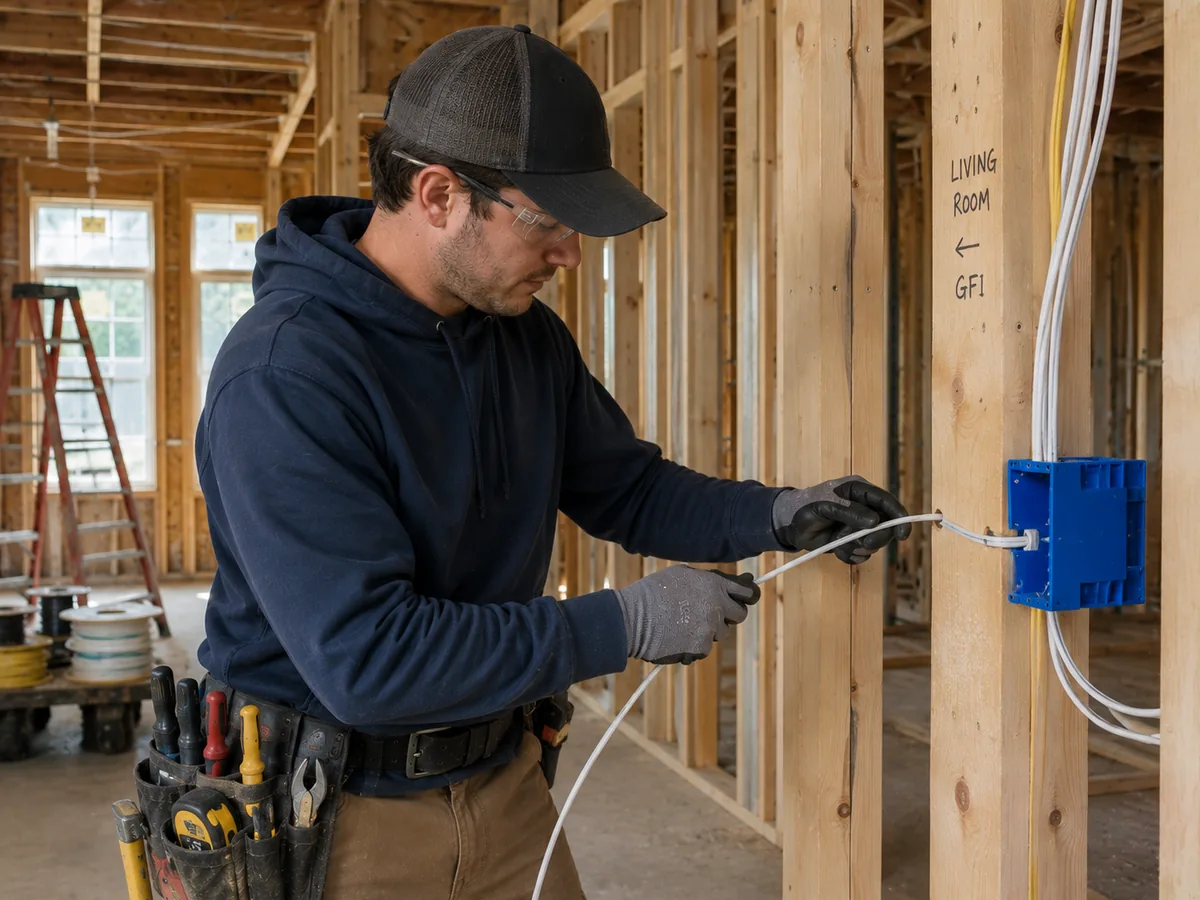
- Rewire in zones. We work a zone at a time so you keep power in the rest of the house. Most families stay in place throughout.
- Inspect, patch and hand over. DOPL inspection, then plaster and paint made good. You get a labeled directory and the permit record.
The North End problem: knob-and-tube in houses worth preserving
The North End is Boise's densest concentration of pre-1940 housing — Craftsman bungalows, Tudor Revivals and Colonial cottages along Harrison Boulevard, Hays Street, Resseguie and around Hyde Park — and a great many of those houses still have active knob-and-tube on some or all circuits.
It matters for two reasons that pull in opposite directions. The first is safety and insurance: knob-and-tube has no equipment grounding conductor, its rubber-and-cloth insulation embrittles with age, and it was designed for a fraction of a modern household's load. It is a disqualifier for most homeowner's policies. The second is value: a North End Craftsman with original fir flooring and intact built-ins commands materially more per square foot than one where those features were destroyed in a previous renovation. Estimates in the Boise remodeling market put that premium at $30 to $60 per square foot.
So the rewire has to happen, and it has to happen without wrecking the thing that makes the house worth rewiring. That is a slower, more careful job than pulling cable through a 1990s subdivision, and any quote that does not reflect it is either optimistic or planning to open more wall than you expect.
Lead paint, and why it changes a pre-1978 rewire
Any home built before 1978 may contain lead-based paint, and houses from the 1900s through the 1950s almost certainly do. That covers essentially all of the North End and much of the Bench.
Rewiring disturbs paint. Cutting into plaster for device boxes, fishing behind baseboards, removing and refitting trim — all of it generates dust in exactly the places lead paint lives. Work that disturbs painted surfaces in pre-1978 housing calls for containment, controlled cutting and proper cleanup rather than a shop vac and a broom.
This is worth asking every bidder about directly, because it is a genuine cost difference and the cheapest quote is frequently the one that has not priced it. If a contractor looks blank when you mention lead-safe practice in a 1912 house, that tells you something about the rest of the bid.
What rewiring a house you live in actually looks like
The question everyone wants answered is how much of the house gets opened up. In a bungalow with a full attic above and a basement or crawlspace below, the answer is less than you fear: most runs drop from the attic or rise from below inside the wall cavity, and the openings are at device boxes that were being replaced anyway. Picture rails, plate rails and original millwork generally survive untouched.
The harder cases are slab-on-grade construction with no under-floor access, low-clearance attics over an addition, and balloon-framed walls with fire blocking. There we fish where we can, use surface raceway in utility spaces where that is honest, and cut and patch where there is no alternative. A contractor should show you where those openings will be before starting, not after.
Sequencing keeps you in the house. Rewiring in zones of two or three rooms keeps the rest of the house energized, and a whole-house rewire on a typical 1,400 square foot bungalow runs one to two weeks of working days with the family in place. Kitchen and bath circuits get scheduled around your life rather than left dead over a weekend.
What is included
- Room-by-room survey of what wiring systems are actually present
- Written scope splitting must-do from can-wait, priced separately
- New NM-B cable on properly sized circuits
- Grounded receptacles throughout, replacing two-prong devices
- AFCI and GFCI protection per the adopted 2023 NEC
- Dedicated circuits for kitchen, laundry and fixed appliances
- Old knob-and-tube de-energized and removed, not abandoned live
- Lead-safe containment and cleanup in pre-1978 homes
What you should expect to pay
Boise historic-home remodeling data for a full rewire of a 1,200 to 1,800 square foot house, the size band most North End and Bench homes fall into.
| Job | Range |
|---|---|
| Whole-house rewire, 1,200-1,800 sq ft | $12,000 - $25,000 |
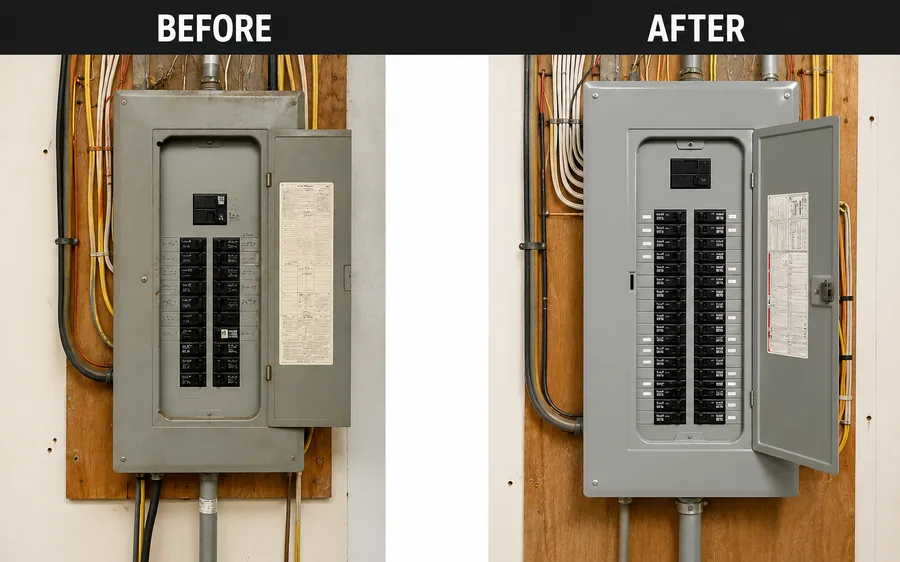
| Panel upgrade, 100A to 200A | $1,500 - $4,000 |
| DOPL electrical permit | Scaled to job value |
The band above is for a 1,200 to 1,800 square foot house, which covers most North End bungalows and Bench ranches. A new panel, if the existing one cannot carry the rewired load, is separate at $1,500 to $4,000. Partial rewires are quoted per zone.
Run the cost estimator for a range against your own situation, or call 208-856-4826 and describe the job.