Last updated: September 24, 2026
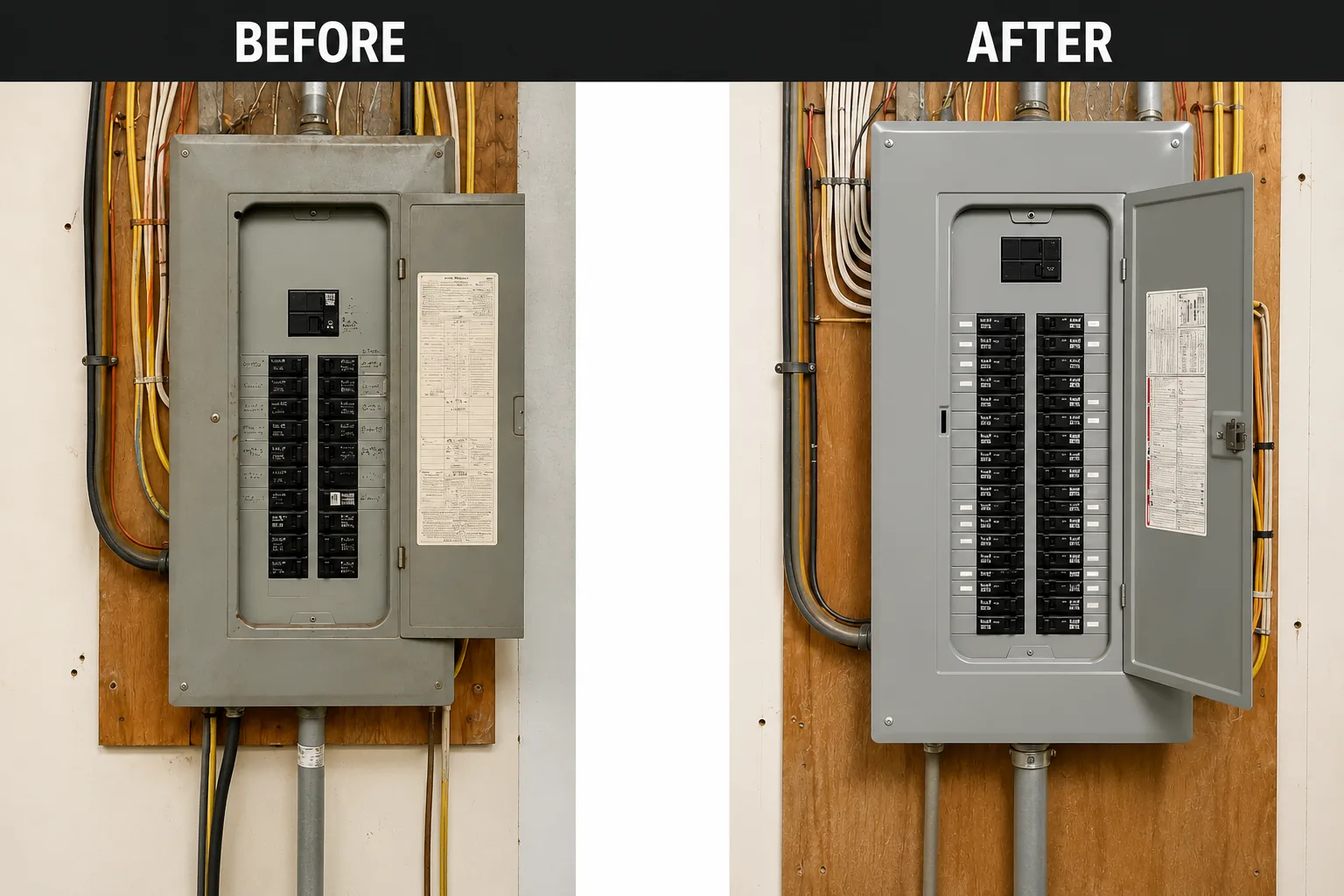
Boise Electrician Experts connects homeowners across Boise and the Treasure Valley with licensed electrical contractors who replace and upgrade service panels. An electrical panel upgrade in Boise usually means one of two jobs: swapping a failing or obsolete panel for a modern one at the same amperage, or raising the service itself, most often from a 100-amp panel to 200-amp. The second is the one that needs a DOPL permit, an inspection and Idaho Power coordination, and it is the one worth understanding before you take bids.
What we do on the first visit
Every electrical panel upgrade job starts the same way: we look before we quote. You get the cause in writing, a price that does not move once work begins, and the permit filed by us rather than by you.
- Load calculation, not a guess. We total the actual connected load under NEC 220 and size the service to it, allowing for what you plan to add.
- Permit and utility scheduling. The DOPL permit is purchased and any Idaho Power disconnect booked. This step sets your date.
- Changeover day. Power off, old panel out, new panel and grounding in, circuits landed and labeled. Most jobs are one day.
- Inspection and reconnect. The state inspector signs it off, the utility reconnects, and the permit record goes in your file.
Why Boise Bench panels are undersized rather than broken
A 100-amp service was generous for a Bench house built in 1955 with one window unit, a gas furnace and no dryer. The same house now runs central air through a Treasure Valley summer, an electric dryer, a dishwasher, a microwave, and frequently a heat pump that replaced the gas furnace. Nothing about the panel has failed. It is being asked for more than it was sized for, and the symptom is a breaker that trips on hot afternoons rather than a dramatic fault.
This is why the load calculation matters more than the amperage on the sticker. Under NEC Article 220 the calculation accounts for general lighting load by square footage, small-appliance and laundry circuits, fixed appliances, the larger of heating or cooling, and then applies demand factors to the rest. A 1,600 square foot Bench ranch that has gone all-electric does not need the same service as a 1,600 square foot house still on gas heat and a gas range, and any contractor who quotes 200 amps without asking what is in the house is quoting a part number rather than a design.
The practical consequence is that a 200-amp upgrade is not automatically the right answer. Sometimes the correct fix is a subpanel for a specific load, or a single dedicated circuit, and a contractor worth hiring will tell you so.
Heat pumps, EVs and ADUs: what is actually driving upgrades here
The Treasure Valley's panel upgrades are being driven by three additions that barely existed when this housing stock was wired.
Heat pump conversions are the big one. Replacing a gas furnace with a heat pump moves a substantial winter heating load onto the electrical service, and in a climate with real winters that load runs at capacity for months rather than hours. Cold-climate heat pumps with electric resistance backup are the worst case, because the backup strip heat can draw more than the compressor. This is the load that most often turns a comfortable 100-amp service into an inadequate one.
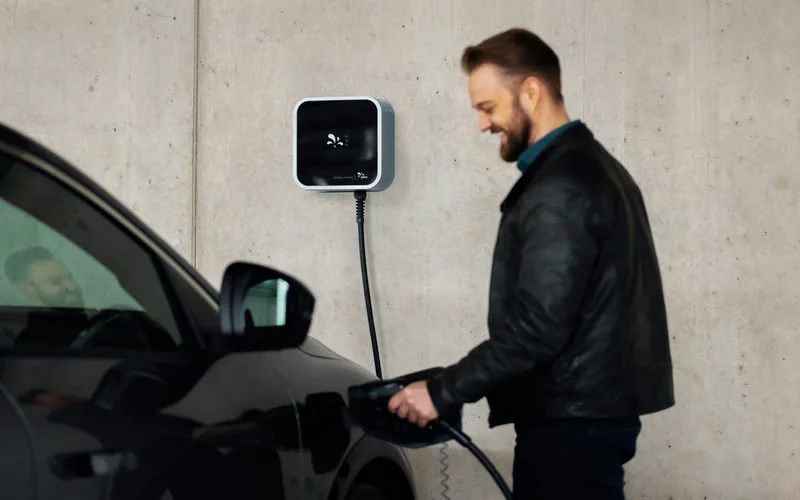
EV charging is the second, and it stacks badly with the first: a 48-amp charger is a continuous load sized at 125 percent under NEC 625, so a 60-amp breaker and conductor to match. The third is the accessory dwelling unit and the detached shop, both common on the valley's larger lots. A shop with a welder or a compressor is a genuine load, not an afterthought, and it usually needs its own subpanel and feeder rather than a circuit borrowed from the house.
Federal Pacific, Zinsco, and panels that are a problem regardless of size
Two panel families turn up constantly in mid-century Bench and Central Boise housing, and both are replacement candidates whatever the load calculation says. Federal Pacific Stab-Lok panels have a documented history of breakers that fail to trip on an overload, which defeats the single thing a breaker exists to do. Zinsco and Sylvania-Zinsco panels suffer bus bar deterioration where the breaker clips on, producing heat at the connection and eventually breakers welded to the bus.
Neither is a code violation on its own, which surprises people. Existing installations are generally allowed to remain. What happens instead is practical: home inspectors flag them at sale, some insurers will not write or renew a policy over them, and replacement breakers are either unavailable or aftermarket. If you have one you will eventually replace it, and doing it on your own schedule costs less than doing it during a sale.
Worth checking at the same time: any panel with visible rust inside the enclosure, corrosion on the bus, or white oxidation on aluminum service entrance conductors. Boise's dry climate is kinder to enclosures than a coastal one, but panels in unconditioned garages and on north-facing exterior walls still see enough condensation cycling to corrode.
What is included
- NEC Article 220 load calculation completed before anything is ordered
- DOPL electrical permit purchased and the inspection scheduled
- Idaho Power disconnect and reconnect coordinated where required
- New panel, breakers and a labeled circuit directory
- Grounding electrode system brought to NEC Article 250
- Water and gas piping bonded per code
- AFCI and GFCI protection per the adopted 2023 NEC
- Inspection attended and the sign-off handed to you
What you should expect to pay
Boise-area range for a service upgrade including the panel, meter base work where required, and the DOPL permit and inspection.
| Job | Range |
|---|---|
| Panel upgrade, 100A to 200A | $1,500 - $4,000 |
| Licensed electrician, hourly | $80 - $140 per hour |
| DOPL electrical permit | Scaled to job value |
Relocating the panel, replacing a corroded meter base, or bringing the grounding electrode system up to NEC 250 are separate line items and should be itemized on any quote you accept.
Run the cost estimator for a range against your own situation, or call 208-856-4826 and describe the job.